
Author: KACO Digital

  • The “Business in a Box” Trap: Why Bundled Templates Alone Won’t Build Your Business

    You bought the bundle. The templates are sitting in your downloads folder, the swipe files look great, and the “business in a box” promised everything you’d need to get started. So why does it still feel like nothing’s happening?

    Here’s the honest truth: a template is a head start, not a finish line. It hands you structure so you don’t stare at a blank page — but it can’t do the parts that actually make a business yours.

    What a template actually gives you

    A good bundle saves you from reinventing the wheel. It gives you proven structure: the sections a sales page needs, the flow a course outline should follow, the fields a client contract shouldn’t skip. That’s real value — hours of guesswork removed in minutes.

    But structure isn’t the same as a finished, working business. The template doesn’t know your audience, your pricing, your voice, or what makes your offer different from the next person who bought the exact same bundle.

    The three things templates can’t do for you

    1. Customize your voice. If your sales page reads exactly like everyone else’s who bought the same template, buyers can feel it. Rewrite the copy in your own words, even if the structure stays.
    2. Validate the offer. A beautifully designed page selling something nobody wants still sells nothing. Test the idea with real people before polishing the design further.
    3. Show up consistently. Templates don’t post, follow up, or handle objections. That part is still entirely on you.

    How to actually use a “business in a box”

    Treat it as a scaffold, not a script. Fill in the structure with your specific offer, your specific numbers, your specific story. Change the headlines. Swap the examples. Make it sound like you, not like a template.

    Then launch it imperfectly. A customized, slightly rough version that’s live beats a perfectly polished template sitting untouched in a folder.

    The real value of a good bundle

    The point was never to hand you a finished business. It was to remove the parts that waste your time — formatting, structure, guessing what sections you need — so you can spend your energy on the parts that actually require you: the offer, the voice, and showing up.

    Used that way, a template stops being a shortcut you’re waiting to work, and becomes exactly what it was meant to be: a head start.

  • AI Isn’t Here to Take Your Job — It’s Here to Multiply You

    AI Isn’t Here to Take Your Job — It’s Here to Multiply You

    AI isn’t here to take your job. It’s here to hand you a shortcut — if you know how to use it.

    That’s the honest truth behind all the noise. Every week there’s a new headline warning that AI is coming for this career or that industry. But the people actually building with AI every day tell a different story: it isn’t replacing skilled, intentional humans. It’s replacing the old way of doing repetitive, time-consuming tasks — and rewarding the people who learn to direct it well.

    The real advantage AI gives you

    Think about what used to take hours: drafting a business plan, writing product descriptions, researching a topic, designing a logo concept, outlining a course. AI doesn’t do the thinking for you — it removes the blank page. It gives you a starting point, a first draft, a rough sketch you can then shape with your own judgment, taste, and experience.

    That’s the real advantage: AI compresses time. What took a full day now takes an hour. What took a week of research now takes an afternoon. The humans who win in this new landscape aren’t the ones who resist that shift — they’re the ones who learn to ride it.

    It’s not one tool for every job

    Here’s where most people get stuck: they try one AI tool, it doesn’t do exactly what they wanted, and they conclude “AI isn’t for me.” But that’s like trying to fix a leaking pipe with a hammer and deciding tools don’t work.

    Different jobs need different tools:

    • Writing and brainstorming — general-purpose AI chat tools are excellent for drafting, outlining, and thinking out loud
    • Research and fact-checking — tools with real-time web access matter here, since not all AI tools can verify current information
    • Design and visuals — dedicated image-generation tools, not text-based AI, are built for this
    • Repetitive business tasks — purpose-built mini apps and automations (the kind we build here at KACO Digital) often outperform general AI chat for narrow, repeatable jobs

    Knowing which tool fits which job is half the skill. The other half is learning to ask well — AI responds to how clearly you explain what you actually need.

    How to actually master it

    You don’t need to become a programmer or an “AI expert” to benefit. You need three things:

    1. Practice regularly. Even ten minutes a day using AI for a real task in your business builds intuition fast.
    2. Learn to give context. The more specific and detailed your request, the better the output. Vague questions get vague answers.
    3. Treat it as a collaborator, not an oracle. The best results come from a back-and-forth — you review, refine, redirect. AI drafts; you decide.

    The people who benefit most

    Entrepreneurs building solo, without a team to lean on. Creators trying to do the work of five people. Small business owners who can’t afford to hire out every task. This is exactly who AI was built to serve — it gives you leverage that used to require a much bigger budget.

    The tools exist. The advantage is real. The only question left is whether you’ll learn to use them — or watch from the sidelines while others do.


    At KACO Digital, we build practical, single-purpose AI tools and offline apps designed to do one job well — no bloated features, no unnecessary complexity. Browse our tools to see what we mean.

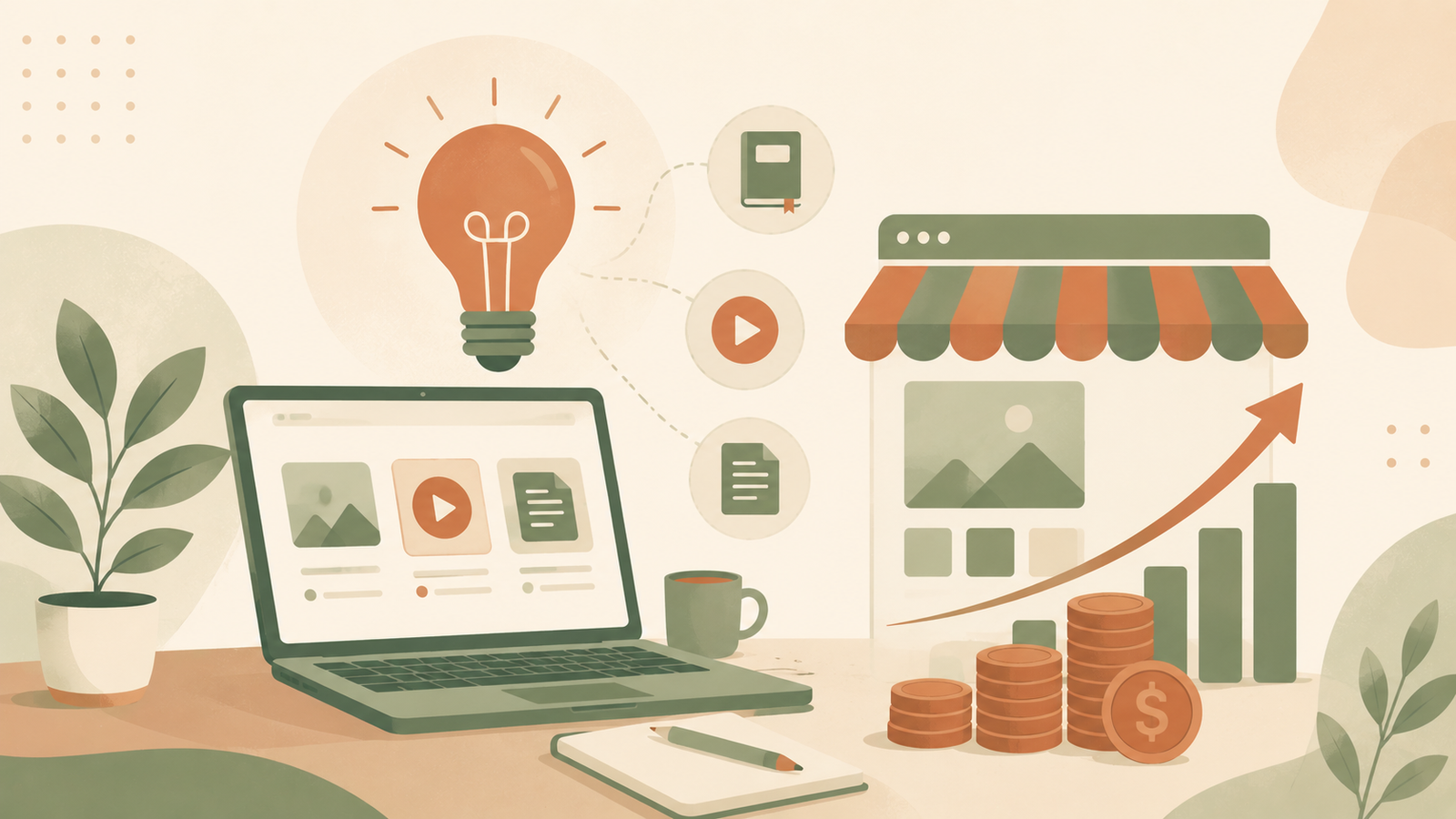
  • 5 Ways to Start Earning From Digital Products in 2026

    5 Ways to Start Earning From Digital Products in 2026

    You don’t need a huge audience or a big budget to start selling digital products. Here are five practical ways to get moving this year.

    1. Start With a Free Tool

    A simple free calculator, checklist, or mini app builds trust and an email list before you ever ask for a sale.

    2. Bundle Instead of Building From Scratch

    Templates, checklists, and short guides bundled together often sell better than one large product.

    3. License, Don’t Just Sell

    Licensing your product to marketplaces creates a second income channel without extra product work.

    4. Let AI Handle the First Draft

    Use AI-assisted tools to speed up first drafts of your product content, then refine in your own voice.

    5. Price With Confidence

    Undercharging is the most common early mistake. Use a simple pricing framework instead of guessing.